
Hearths and Spaces: a private place to coordinate the life you share
A new way to gather the people, conversations, plans, and shared memory that matter—without asking anyone to explain their relationships.
Some of the most important relationships in our lives do not fit neatly into a couple-shaped box.
They may be a polycule, a chosen family, a co-parenting network, a household, or simply a close group of people who show up for one another. They deserve tools that make coordination easier without asking anyone to define, disclose, or flatten the shape of their relationships.
That is the idea behind Hearths and Spaces in Emberside.
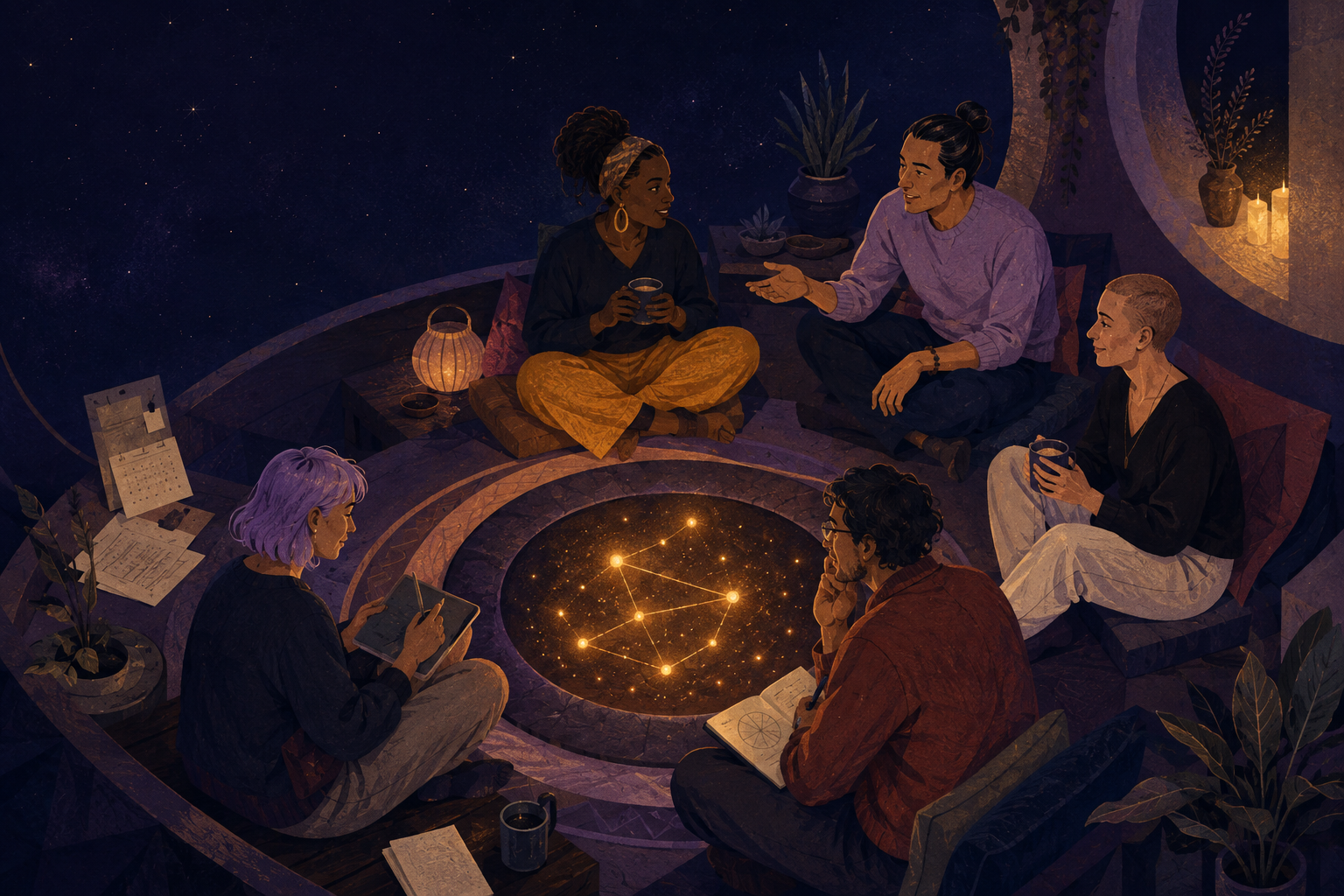
A Hearth is a place, not a label
A Hearth is a private, invitation-only home for people who coordinate or share parts of their lives. Inside a Hearth, members are called Emberlights.
That name is intentional. Joining a Hearth does not say that someone is your partner, family member, housemate, or anything else. It does not expose a relationship map, and it does not turn one person into the owner of everybody else’s space.
You can belong to more than one Hearth. Each one remains separate by default.
This matters because people should be able to gather around the relationships and responsibilities that are real in their lives—not around an app’s assumptions about what those relationships ought to look like.
More than a group chat
Group chats are useful, but they are a fragile foundation for a shared life. A chat cannot tell you who belongs, what they can access, how decisions are made, or what should happen when someone leaves.
Hearths are designed to bring those pieces together in one coherent place:
- People for the Emberlights who belong there, with relationship connections shown only when everyone involved has chosen to disclose them.
- Discuss for durable topics that should not disappear into a fast-moving chat.
- Messages for independent private conversations, each with its own participants and history.
- Calendar for plans, gatherings, and shared coordination.
- Gallery and Library for the photos and documents a group wants to keep.
- Governance for the agreements, proposals, and practical choices that make shared spaces workable.
The point is not to make every group formal. It is to give people a place where the things they already coordinate can be held with more care.
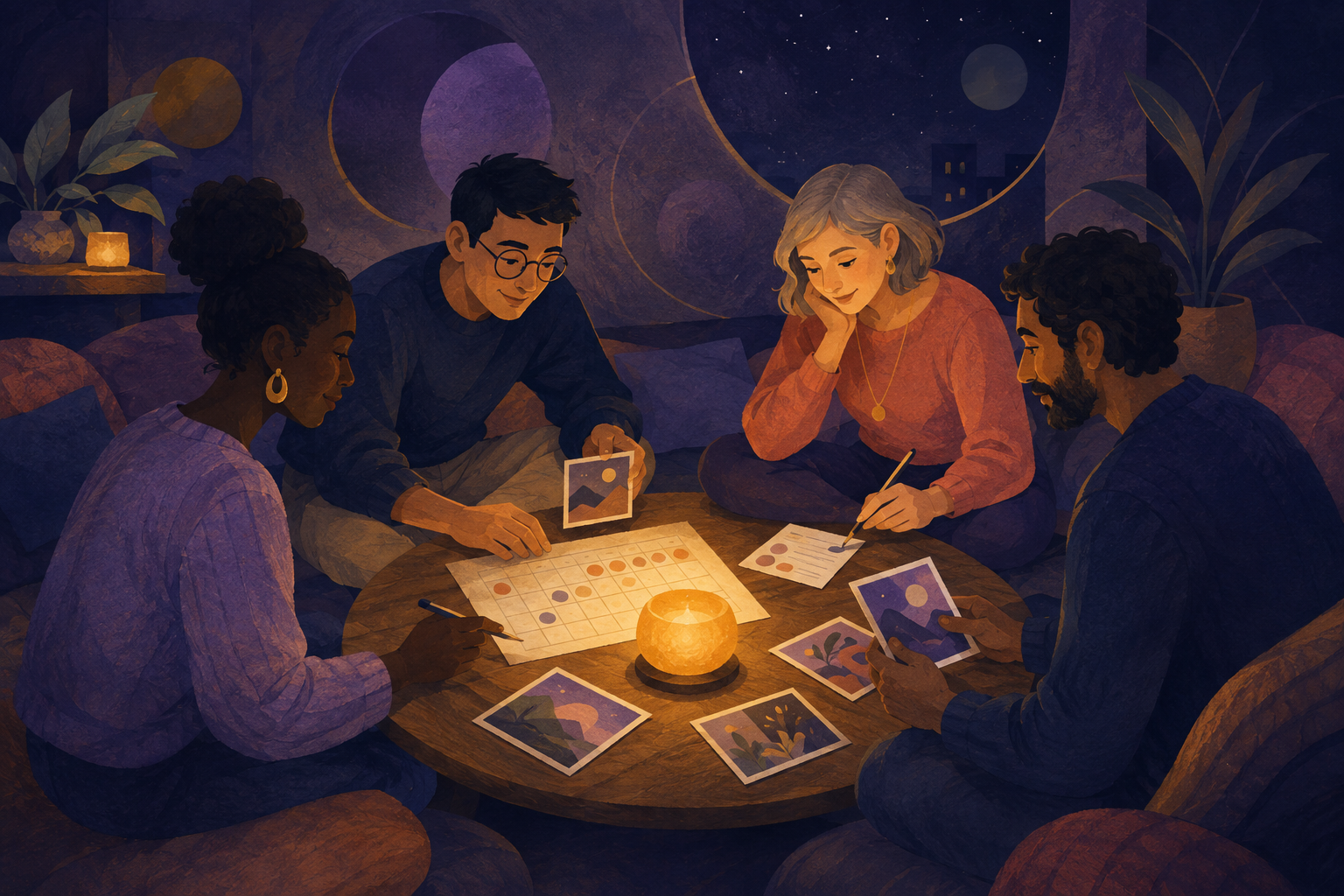
What people can actually do in a Hearth
A Hearth is meant for the ordinary work of being connected: bringing a question back when it matters, deciding who is coming to something, keeping a photo that should not vanish into a chat scroll, and making a shared decision without giving one person the final word by default.
Keep conversations that deserve to last
In Discuss, Emberlights can start a durable topic, reply over time, quote a useful point, and mark a thread resolved when it has done its job. A discussion can link to a poll, event, album, document, or governance proposal, so the context travels with the work instead of being reconstructed from scattered messages.
Messages remains a place for private conversation, not the definition of who belongs. A Hearth can hold multiple deliberately named chats with different participant sets—useful when a smaller conversation needs its own boundaries—without changing anyone’s standing in the Hearth itself.
Plan together and keep shared memory
The Calendar is for timed or all-day events, recurring plans, invitations, and personal RSVPs. It gives a group a native place to coordinate while leaving each person in control of their own availability.
Gallery and Library give shared photos and reference material a home of their own. Albums can preserve captions and alt text; the Library can hold the documents that make a life run—notes, spreadsheets, PDFs, and other carefully checked files—without turning a public link into the default audience.
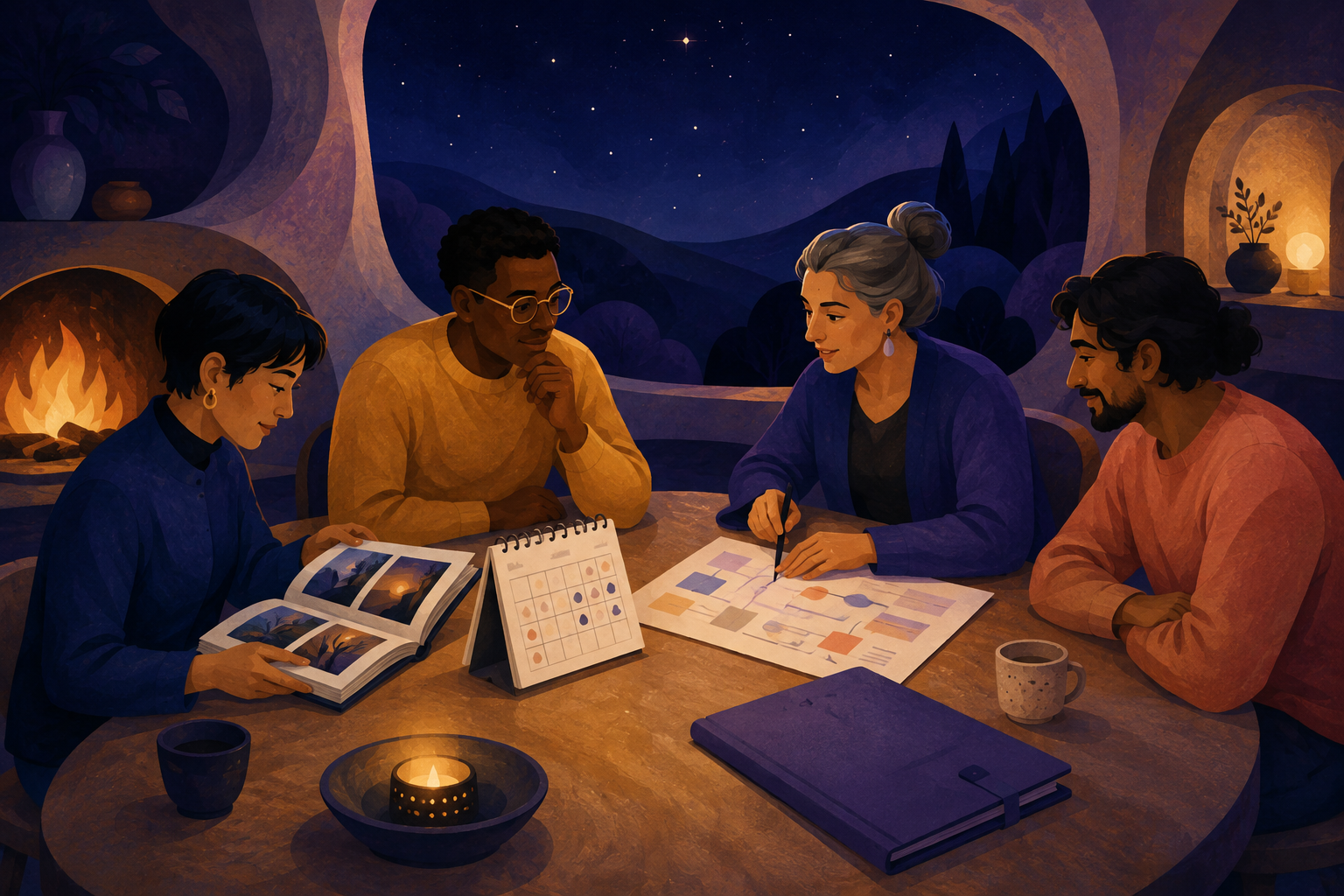
Make decisions without inventing an owner
Governance lets a Hearth make its own agreements about things such as admission, proposals, shared configuration, and the handling of older collaborative content. A proposal can make the question, the people affected, the decision rule, and the deadline visible before anyone acts.
That does not put personal boundaries up for a vote. Every Emberlight can still leave, block, report, and withdraw an optional disclosure on their own terms. Creating a Hearth, paying for a service, or holding a title does not automatically grant authority over other people.

Spaces should respect context
Spaces are how Emberside keeps different parts of life from bleeding into one another. A Hearth has its own people, activity, and resources; it does not automatically reveal that it exists to another Hearth, nor does it merge the people inside it.
That boundary is especially important for people whose relationships overlap in complicated ways. A person can be part of several communities without one community becoming a window into another. Membership is explicit, invitations are clear about what they reveal, and every invitee chooses for themselves whether to join.
A shared space should make coordination easier, not make privacy harder.

Consent stays with the person
We are building Hearths around a simple principle: group membership and personal relationships are not the same thing.
An Emberlight can be a full member without declaring any relationship to anyone else. If two people want to show a connection inside a Hearth, both need to agree. Either person can revoke that disclosure. And every member retains the ability to leave, block, or report without needing permission from the group.
The person who creates a Hearth is not its owner. Someone contributing to a paid service does not gain social authority. A chat does not become the source of truth for membership. Those boundaries are not implementation details—they are part of the product promise.
Building toward a more useful kind of together
Hearths and Spaces are still taking shape, and we are approaching them carefully. Privacy, safety, clear invitations, and understandable choices matter more than moving quickly for the sake of a feature checklist.
We are especially interested in learning from people whose lives are often poorly served by conventional relationship software: polyamorous people, relationship anarchists, chosen families, co-parents, households, and close friends building practical support systems together.
If that sounds like your world, we would love to have you with us as we build. Follow Emberside’s progress to hear about product updates, early access, and opportunities to shape what comes next.